

Blog
On 6 June 1944, Allied troops landed on five sectors of the Normandy coast: Utah, Omaha, Gold, Juno and Sword. These D-Day beaches now stretch for almost 80 km, between the Manche and Calvados departments, dotted with museums and military cemeteries. Exploring them takes two to three days, which many spend at a waterside campsite, facing the very sea the Allies landed on.
Utah was the westernmost American sector of the D-Day landings. It’s located in the Manche department, near Sainte-Marie-du-Mont. Troops here suffered relatively limited casualties on 6 June 1944, far from the toll at Omaha. The Utah Beach D-Day Museum, set facing the dunes, retraces the assault and the Allied advance towards Cherbourg.
Good to know: Utah remains the most accessible sector if you’re arriving from the Cotentin or Cherbourg. Its vast dunes are perfect for a long walk at low tide, away from the crowds at Omaha. Bring a windbreaker, as the westerly wind often blows here, even in the height of summer.
Omaha, in Calvados, remains the deadliest sector of D-Day, which earned it the nickname Bloody Omaha. This American sector stretches out below the bluffs where the American Cemetery at Colleville-sur-Mer, with its 9,400 graves, now stands. The beach, vast at low tide, can be freely explored today.
Our tips: arrive early at the American Cemetery in Colleville-sur-Mer, before the tour groups. The silence is deeper in the morning, and the light on the white headstones is softer. Then allow a good hour to walk down to Omaha Beach via the marked path.
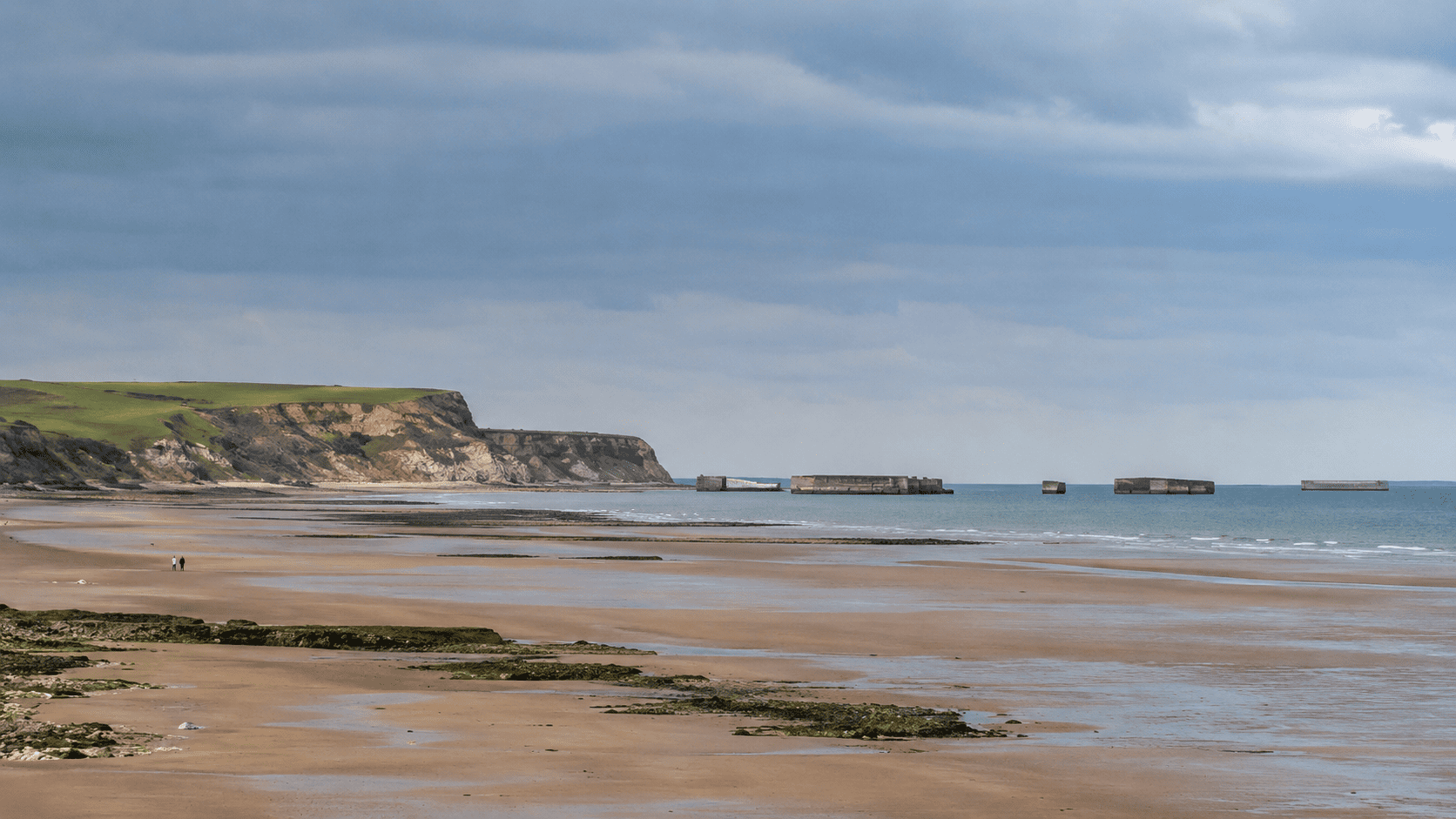
Gold, located around Arromanches in Calvados, was a British sector. It’s where the Mulberry artificial harbour was assembled, its concrete caissons still visible in the bay today. Its code name is said to come from “goldfish”. The Arromanches D-Day Museum details this remarkable feat of logistics.
The little extra: in Arromanches, watch for low tide. The huge concrete caissons of the Mulberry harbour then emerge from the water, almost close enough to reach on foot. It’s the only spot along the D-Day beaches where the engineering of D-Day can almost be touched, right there on the sand.
Juno, around Courseulles-sur-Mer, was the Canadian sector of the D-Day landings. The Juno Beach Centre now commemorates Canada’s role in the Battle of Normandy. The name is said to have been chosen after the first name of a Canadian officer’s wife, following the rejection of the name “Jelly”, considered too frivolous.
Our team’s view: Juno is often overlooked in favour of Omaha and Sword, wrongly so. The Juno Beach Centre, staffed by Canadian guides, offers a vivid account of 6 June. A more intimate stop, ideal for families with children already curious about history.
Sword, near Ouistreham in Calvados, was a British sector. It’s also where the 177 French commandos of Commando Kieffer landed, the only French troops engaged on the beaches on 6 June. Its name comes from “swordfish”. The sector borders the famous Pegasus Bridge, captured during the night before the assault.
“Sword is the French beach: the 177 men of Commando Kieffer landed there alongside the British. Many visitors don’t know this, and it’s often the most moving moment of their trip,” says our team.
A trip to the D-Day beaches requires a little planning, as the sites stretch for almost 80 km. A car remains the most practical way to travel between Utah, in the Manche, and the British and Canadian sectors in Calvados. Allow two to three days to take in all five sectors, several museums and the cemeteries without rushing.
D-Day remains the largest amphibious and airborne operation in history. The season also changes the experience: in summer, Omaha or Arromanches get busy around midday, while spring and autumn offer quieter beaches and beautiful light over the Channel.
Our tip: aim for late afternoon to walk along Omaha or Utah. The low, golden light and the outgoing tide reveal vast stretches of sand, often deserted once the tour groups have left. A peaceful moment that contrasts with the busier museums at midday.
Dreaming of combining remembrance with a waterside holiday on the Normandy coast? Compare our campsites near the beaches of Normandy now, and book your stay as close as possible to the coastline.
There are five D-Day beaches, corresponding to the five sectors of 6 June 1944: Utah and Omaha for the Americans, Gold and Sword for the British, and Juno for the Canadians. They span almost 80 km of coastline, between the Manche and Calvados departments.
Omaha and Arromanches are among the recommended first stops. Omaha, overlooked by the American Cemetery at Colleville-sur-Mer, captures the emotional weight of D-Day. Arromanches, in the Gold sector, shows the remains of the Mulberry artificial harbour right there on the beach, an ideal starting point for your visit.
Allow two to three days to explore the main sites without rushing. This gives you enough time to travel between the five sectors, visit two or three museums, and take a moment for quiet reflection in the military cemeteries, all while enjoying the coastline between visits.
Yes, swimming is possible on these vast beaches in the Manche and Calvados, supervised in certain sectors during the season. These stretches of sand remain, above all, places of remembrance, but there’s nothing stopping you from enjoying the sea, relaxing, or taking a walk as the tide goes out.