

Blog
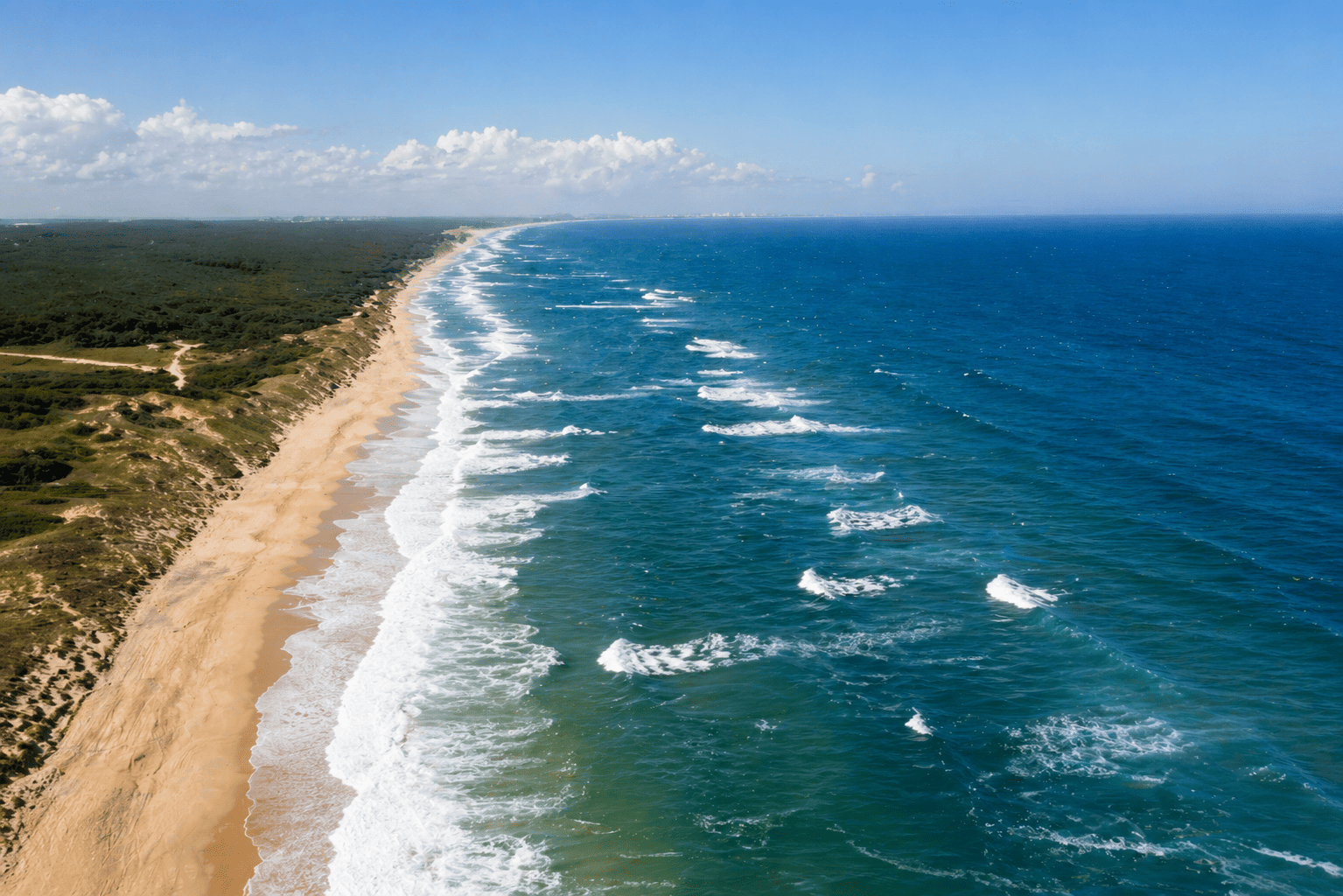
The difference between a sea and an ocean comes down to 5 concrete criteria: size, depth, salinity, tides and wildlife. An ocean is a vast expanse of salt water separating the continents. A sea, smaller in size, is often found bordering an ocean or within an almost enclosed basin. For anyone planning a holiday at a waterside campsite, the distinction matters. It has a direct impact on the climate, the activities and the overall feel of the stay.
An ocean refers to the largest expanse of salt water on Earth. Geographers officially recognise 5 oceans, following the delimitation of the Southern Ocean by the International Hydrographic Organization. According to Ifremer (the French Research Institute for Exploitation of the Sea), these immense bodies of water cover almost 71% of the planet’s surface and hold 97% of the world’s water.
A sea, on the other hand, refers to a smaller expanse of salt water. It’s often connected to an ocean, such as the Mediterranean Sea or the North Sea. Some remain entirely enclosed, such as the Dead Sea or the Caspian Sea. The term therefore covers a wide variety of configurations. These differences explain the variations in salinity, temperature and wildlife from one sea to another.
Beyond size, several objective criteria distinguish a sea from an ocean. This table sums up the main differences:
| Criteria | Ocean | Sea |
| Size | Very vast, several million km² | Smaller, from a few thousand to a few hundred thousand km² |
| Average depth | 3,800 metres | A few hundred to 1,500 metres |
| Average salinity | Around 35 g/L | Highly variable (38 g/L in the Mediterranean, 40 g/L in the Red Sea) |
| Tides | Strong and regular | Weak, almost absent in the Mediterranean |
| Wildlife | Highly diverse, with large cetaceans and pelagic species | More limited, sometimes endemic |
These differences shape the climate of neighbouring coastlines. An ocean shore comes with open beaches, breaking surf and pronounced tides. An enclosed sea shore produces warmer, saltier and calmer water. This is why a campsite on the Mediterranean feels nothing like a campsite on the Atlantic coast.
Our take: beyond the figures, each shoreline tells a different story. The ocean captivates with its endless horizons and energy. The enclosed sea reassures with its gentleness and vivid colours. Both are worth experiencing at least once in a lifetime, so you can judge the contrast for yourself and pick your favourite depending on your mood.
Earth officially has 5 oceans: the Pacific, Atlantic, Indian, Arctic and Southern Oceans. The International Hydrographic Organization delimited the Southern Ocean around Antarctica later than the others. Together, they form what scientists call the World Ocean, a vast interconnected body of salt water.
Counting the number of seas is far more complex. Some sources mention around 50 seas, others more than 70, depending on the criteria used. These discrepancies come down to differing definitions over time. Drawing borders remains difficult in bodies of water that flow into one another. Among the best known are the Mediterranean Sea, the Caribbean Sea, the China Sea, the Black Sea and the Baltic Sea.
The choice mainly comes down to the atmosphere you’re after. An ocean-side campsite, on the Atlantic coast or the Channel, promises fresh air and powerful waves. The beaches stretch for miles. A seaside campsite on the Mediterranean, on the other hand, focuses on gentleness and water reaching 25°C in summer. Sheltered coves replace the long open beaches.
A few pointers to help you decide, based on what suits you:
Book your next getaway and compare the atmospheres, waters and scenery for yourself, right here on our site!
The biggest difference between a sea and an ocean lies in their size. An ocean covers several million km² and stretches between continents. A sea, smaller in scale, sits along the edge of an ocean or within an almost enclosed basin. Depth, tides and salinity generally follow this same hierarchy.
Sea water is sometimes saltier than ocean water because of evaporation. In a semi-enclosed sea like the Mediterranean, intense sunshine evaporates more water than rivers bring in. As a result, the salt becomes more concentrated. In an open ocean, constant exchange balances out this effect.
No, not all seas are connected to an ocean. Some, like the Caspian Sea or the Dead Sea, are completely enclosed and are actually large salt lakes. Others, like the Mediterranean Sea or the North Sea, remain connected to an ocean via a strait or narrow passage.
Yes, you can swim in both a sea and an ocean, though the experience differs. Sea water tends to be warmer, calmer and saltier. The ocean offers more powerful waves, tides and livelier water. The choice comes down to what you’re after: relaxation in the Mediterranean, or energy on the Atlantic.