

Blog
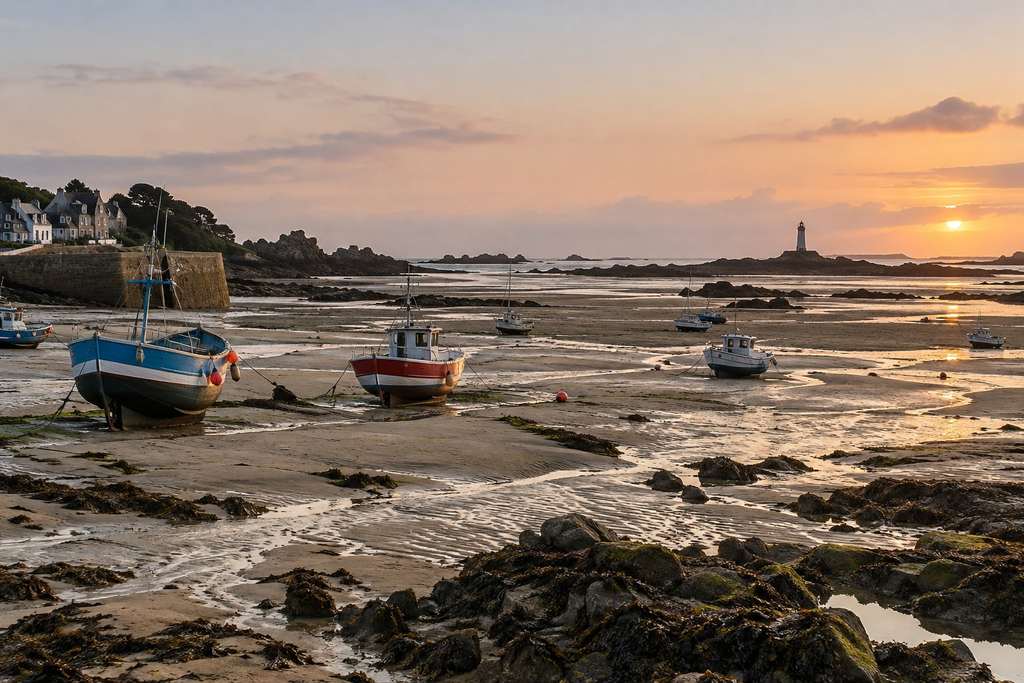
On the Atlantic coast and in the English Channel, the tide sets the rhythm of the day: it decides when to swim, when to go shore fishing, or when you can cross a tidal causeway. To plan ahead, you need one number: the tidal coefficient, published in all tide tables and on beach signs.
What a tidal coefficient is, how to read it, what high and low tide mean, and how to make the most of the sea safely during your seaside holiday: here are the essentials.
| Information | At a glance |
|---|---|
| Definition | A number between 20 and 120 that measures the tidal range |
| Neap tides | Low coefficient, around 45 and below: the sea rises and falls little |
| Spring tides | High coefficient, above 70: large tidal range |
| King tides | Above 100, mostly near the equinoxes |
| Rhythm | About two high tides and two low tides a day |
| Reference | The official predictions of the SHOM |
The tide is caused by the pull of the Moon and, to a lesser extent, the Sun on the oceans. The tidal coefficient is a number that indicates the range of the tide, meaning the difference between high and low water, compared with an average tide. It runs from 20, for the smallest tides, to 120, for the largest possible.
At a given moment the coefficient is the same along the whole French coast, but the actual range, in metres, varies enormously from place to place: a few dozen centimetres in the Mediterranean, and more than 10 metres in the Mont-Saint-Michel bay during king tides.
The coefficient follows the lunar cycle. At the new moon and the full moon, the Moon and the Sun are aligned: their effects add up and the coefficients are high. These are the spring tides. At the first and last quarters, their effects cancel each other out and the coefficients are low. These are the neap tides.
The king tides, with coefficients above 100, occur mainly around the spring and autumn equinoxes, when the Sun is above the equator. They uncover very large stretches of intertidal zone, prized by shore fishers, but the sea also comes back in much faster.
On the Atlantic coast and in the Channel, the sea rises and falls about twice a day, with a shift of around fifty minutes from one day to the next. A tide table gives, for each port, the time and height of high water and low water, as well as the coefficient. The sea does not rise at a constant speed: according to the rule of twelfths, it rises slowly at first, very fast in the middle of the rising tide, then slows before high water.
During king tides, the sea can rise faster than a person can walk, especially in bays. Never venture away from the shore without knowing the time of low water, keep an eye on the sea and head back as soon as the tide starts to come in. In the Mont-Saint-Michel bay, walking across is only allowed with an approved guide, because of quicksand and the speed of the tide.
Understanding the tidal coefficient means making the most of the sea on holiday: shore fishing on high coefficients, swimming around high tide and walks in complete safety. Check the tide table for your beach every day; it is often displayed at the reception of seaside campsites.
A number between 20 and 120 that indicates the range of the tide, meaning the difference between high water and low water.
Above 100. King tides occur mainly around the spring and autumn equinoxes.
At spring tides, at the new and full moon, the coefficients are high. At neap tides, at the quarter moons, they are low.
On the Atlantic coast and in the Channel, about two high tides and two low tides a day, with a shift of around fifty minutes from one day to the next.
A high coefficient, above 80 and ideally 100, uncovers more intertidal zone. Set out about two hours before low water.
On the official SHOM website, in tide tables and often at the reception of campsites and tourist offices along the coast.
Campsites marked “Partner” are Aimer Camper members and are shown first. All results match your search.


