

Blog
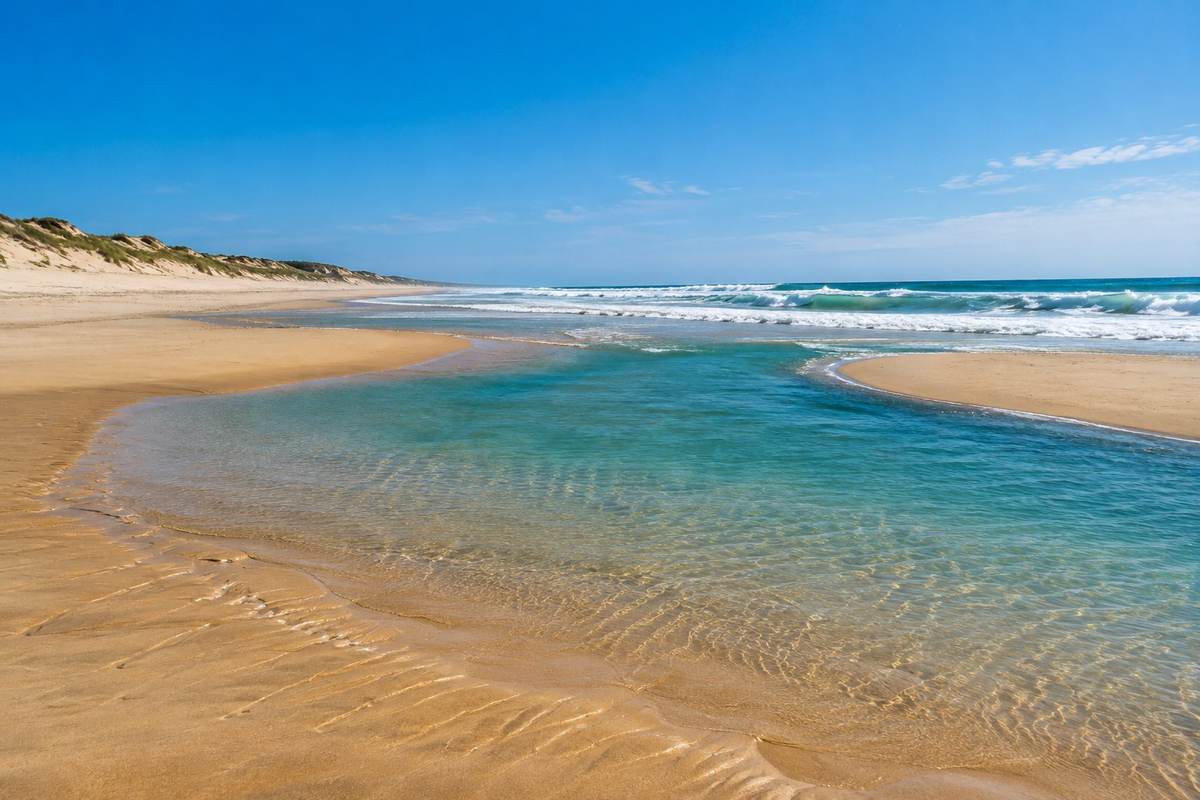
Every summer, baïnes make the headlines along the Atlantic coast. These calm pools of water, so tempting to children at low tide, can turn into powerful currents within minutes, carrying swimmers out to sea. In June 2026, the Gironde recorded several drownings and dozens of rescues in just a few days.
Understanding what a baïne is, knowing how to spot one and knowing the right reflexes is nevertheless enough to avoid most accidents. Here is what you need to know before swimming on the ocean beaches.
| Information | At a glance |
|---|---|
| Definition | A hollow of water between the shore and a sandbank, connected to the ocean by a channel |
| Where? | Mainly in the Gironde and the Landes, also in Charente-Maritime and the Basque Country |
| When is it dangerous? | On the rising tide and at the end of the falling tide, especially with heavy swell |
| The trap | A current that flows out to sea and carries away even strong swimmers |
| The right reflex | Do not fight the current, let yourself drift, signal for help, then swim parallel to the beach |
| Emergency numbers | 112, 18 or 15 |
The word comes from Gascon and refers to a sand depression, a kind of large basin lying between the beach and a sandbank running parallel to the shore. At low tide it forms a natural pool of warm, shallow water. Some baïnes are around a hundred metres wide and several metres deep.
The baïne connects to the ocean through a channel. When the tide rises, water floods the basin over the sandbank, then has to get out again: it does so through this channel, creating a rip current that runs out to sea. That is where the danger lies.
A baïne’s current can exceed the speed of a confident swimmer. Someone standing in the basin loses their footing within seconds and is carried out to sea, far from the spot where they thought they were safe.
The risk rises when several factors combine: heavy swell, high tidal coefficients, strong wind and very busy beaches. The state authorities remind us that baïnes are most dangerous in the first hours of the rising tide and the last hours of the falling tide. Lifeguards see it every summer: most drownings on the Atlantic coast happen outside supervised areas or outside supervision hours.
A baïne can often be spotted from the beach, provided you take the time to watch the sea before going in:
Baïnes shift with storms and tides: a beach that was safe last year may have changed. The simplest step is to ask the lifeguards at the rescue post where the baïnes are today.
The golden rule: never fight the current. Swimming against it exhausts you within minutes, and exhaustion is what leads to drowning. The right reflexes are:
If you see someone in difficulty, do not go and get them yourself without equipment: alert the lifeguards immediately or call 112, 18 or 15.
A few simple habits greatly reduce the risk:
To choose your beach, our selection of the most beautiful beaches in the Landes points out the spots best suited to families.
Choosing a campsite near a supervised beach makes family swimming easier. In the Landes, the Village Tropical Sen Yan, in Mézos, combines a large water park, ideal when the ocean is too rough, with quick access to the beaches of Mimizan. On the Arcachon Basin, the Domaine de la Forge, in La Teste-de-Buch, puts the sheltered beaches of the Basin and the large ocean beaches within cycling distance.
You will find all our seaside campsites in the Landes and in the Gironde.
Baïnes should not keep you away from the ocean: they are part of the charm of the Atlantic’s great sandy beaches. Just learn to recognise them, swim between the flags and never fight the current. With these reflexes in mind, the Landes and Gironde coast remains one of France’s finest holiday destinations.
It is a sand depression between the beach and a sandbank, connected to the ocean by a channel. At low tide it forms a natural pool, but it becomes dangerous when the sea rises again.
When the tide rises, the water that fills the baïne flows back out through the channel, forming a current towards the open sea that is often faster than a good swimmer.
Do not fight the current, let yourself drift, make yourself visible and swim parallel to the beach once the current weakens.
In the first hours of the rising tide and the last hours of the falling tide, especially with heavy swell and large coefficients.
Mainly on the sandy coast of the Gironde and the Landes, but also in Charente-Maritime and on some beaches in the Basque Country.
Look for an area without waves between two bands of foam, darker water, or foam and seaweed drifting out to sea. If in doubt, ask the lifeguards.
Campsites marked “Partner” are Aimer Camper members and are shown first. All results match your search.