

Blog
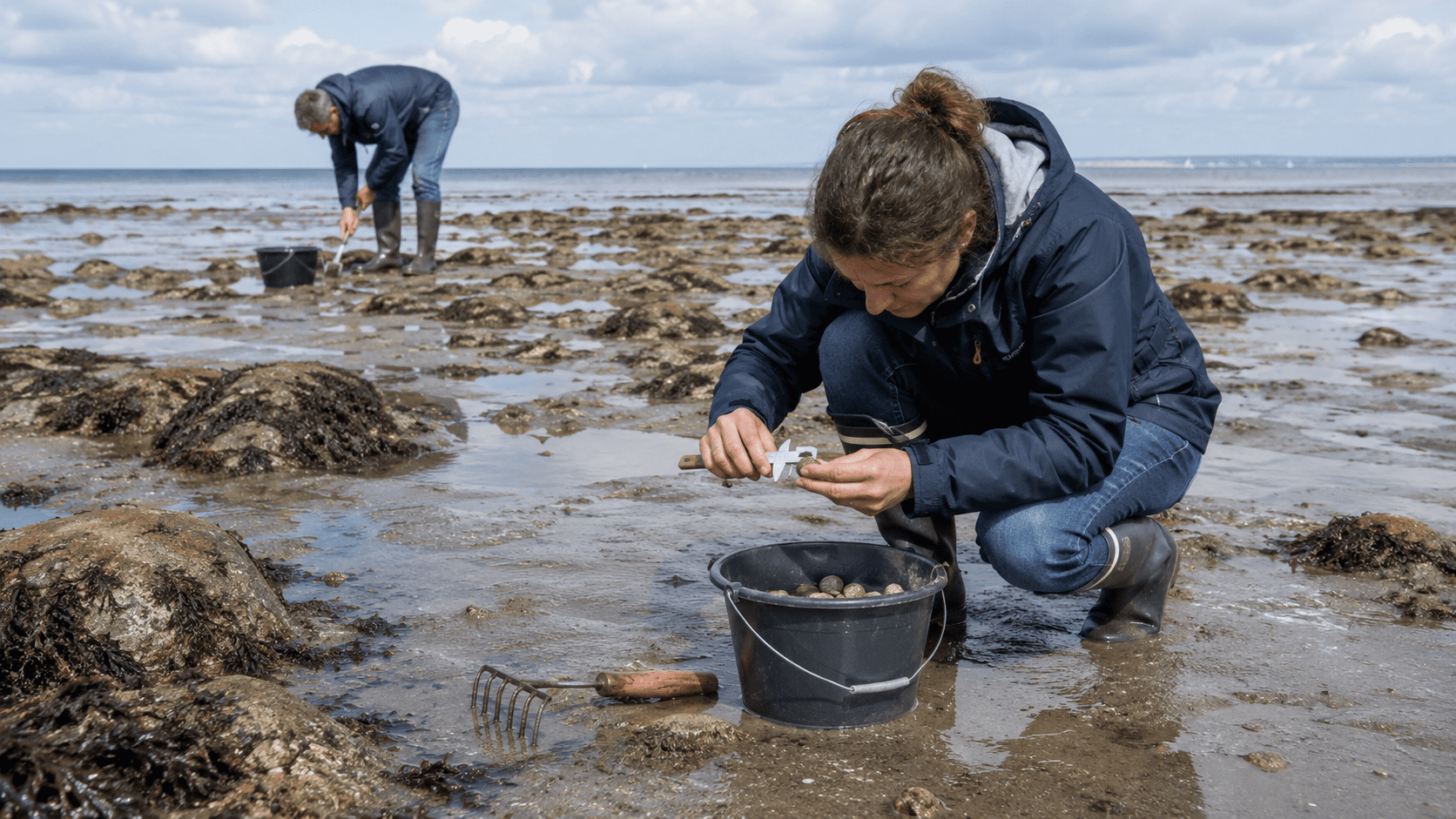
Gathering shellfish and crustaceans as the tide goes out remains a thriving tradition along the French coast. To make the most of this activity, it’s worth knowing the basics: permits, sizes, quotas and gathering windows. The legal framework protects the resource and guarantees your health and safety.
This guide sums up the essentials to know before pulling on your boots during your stay at a seaside campsite!
Recreational shellfish gathering is permitted on the public maritime domain, subject to the framework set by each maritime prefecture. Three main coastal areas coordinate these rules: the Channel-North Sea, the Atlantic and the Mediterranean. Each publishes orders specifying the species, open areas and permitted periods.
The activity remains strictly for personal use: selling, trading or even giving your catch to a shop is prohibited. Officers from the French Office for Biodiversity and maritime affairs regularly check compliance with this rule. An offence can result in a fine of up to €22,500 for the most serious cases, along with confiscation of equipment and catch.
However, some areas fall outside this general freedom: harbours, nature reserves, marine parks, military zones and oyster-farming concessions. Local councils display these bans at the town hall and at beach entrances. Also keep an eye on the shellfish health status, which is sometimes suspended due to toxins, pollution or harmful phytoplankton.
The best outings depend on the tide coefficient and the season. The higher the coefficient, the further the sea retreats, exposing the foreshore – exactly where shellfish and crustaceans gather. From a coefficient of 80 upwards, the exposed area widens considerably. Above 100, we’re talking about spring tides.
The foreshore is exposed only briefly, generally between 1.5 hours before and 1.5 hours after low water slack. This short window means you need to arrive early and keep an eye on the incoming tide. The sea can advance several hundred metres within an hour, particularly in the Bay of the Somme or the Bay of Mont-Saint-Michel.
Shellfish gathering regulations also impose closed seasons to respect breeding cycles. For example, sea urchins are mainly gathered from October to April in the Mediterranean, and scallops from October to May on the Atlantic coast. Grey shrimp are best gathered in late summer and autumn. Cockles and clams, on the other hand, remain accessible year-round, subject to health clearance.
Every species has a minimum catch size, set nationally or by prefectural order, to allow individuals to reproduce at least once. Below this size, gathering is banned and any catch must be returned to the water immediately. A pair of callipers or an official size gauge, slipped into your basket, lets you check on the spot.
Here are the minimum sizes and indicative quotas for the most common species along the French coast:
| Species | Minimum size | Indicative quota per gatherer, per day |
| Cockle | 3 cm | 2 kg |
| Clam | 4 cm | 100 units |
| Mussel | 4 cm | 5 kg |
| Winkle | 1.2 cm | 5 kg |
| Razor clam | 10 cm | 30 to 50 units |
| Pacific oyster | 5 cm | 5 dozen |
| Brown crab | 14 cm | 6 units |
| Velvet crab | 6.5 cm | 6 units |
| European lobster | 8.7 cm (carapace) | 1 to 2 units |
Quotas vary from one department to another: a gatherer in Finistère won’t be able to take exactly the same quantities as one on the Bassin d’Arcachon. Our team recommends checking the prefectural order currently in force for the area you’re visiting, available on the maritime prefecture’s website or at the coastal town hall!
Recreational shellfish gathering places real pressure on coastal ecosystems, particularly on rocky foreshores visited during spring tides. A few simple habits let you enjoy the activity without damaging the environment, preserving the resource for future generations.
The golden rule: never turn over a rock without putting it back exactly as you found it, original side facing up. The algae, anemones and small crustaceans that colonise these hiding spots take several years to re-establish themselves if the rock is left upside down. Also avoid digging deep holes in the sand, which disturbs the habitat of buried shellfish.
A few good habits to keep in mind to limit your impact:
So, ready to make the most of the spring tides on your next stay? Don’t wait any longer to book your riverside campsite or seaside campsite, and head out on a shellfish hunt at dawn!
No, no permit is required for recreational shellfish gathering on the French coast. The activity remains unrestricted on the public maritime domain, provided you respect the minimum sizes, quotas and banned areas set by prefectural order. A permit is only required for professional shellfish gathering.
To go shellfish gathering in good conditions, aim for a tide coefficient above 80. Above 100, spring tides expose a vast area of foreshore, making it easier to gather shellfish and crustaceans. The highest coefficients occur around the spring and autumn equinoxes.
Penalties for breaking the regulations range from a fixed fine to several thousand euros, or even €22,500 for the most serious offences. Confiscation of equipment and catch is systematic. Selling the product of shellfish gathering, even occasionally, is an offence punished more severely.
Yes, night-time shellfish gathering is permitted in most departments, provided you follow the same rules as during the day. A waterproof head torch, suitable boots and checking the tide times beforehand are essential. However, some prefectures restrict night-time gathering for sensitive species.
The prefectural orders applying to shellfish gathering can be consulted at the town hall, on each maritime prefecture’s website, or on the portals of the regional sea authorities. The official website pecheapied-loisir.fr and Ifremer’s health status map also bring together useful information by area and species.