
guide
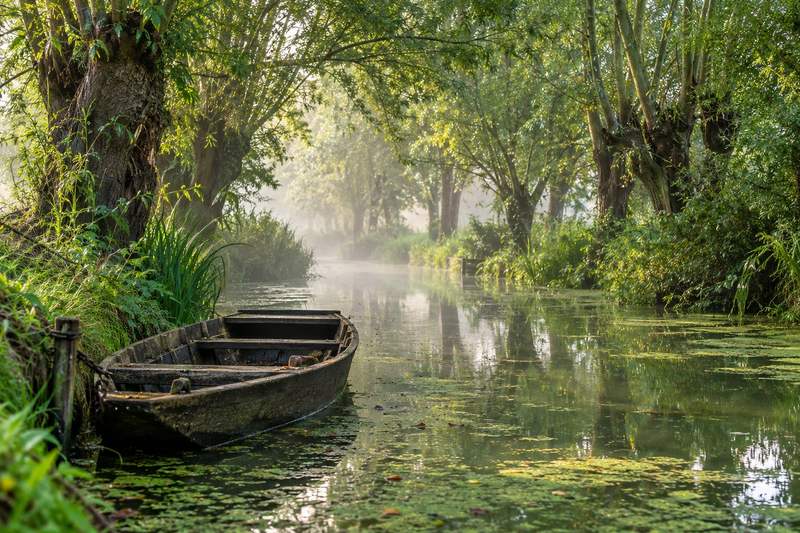
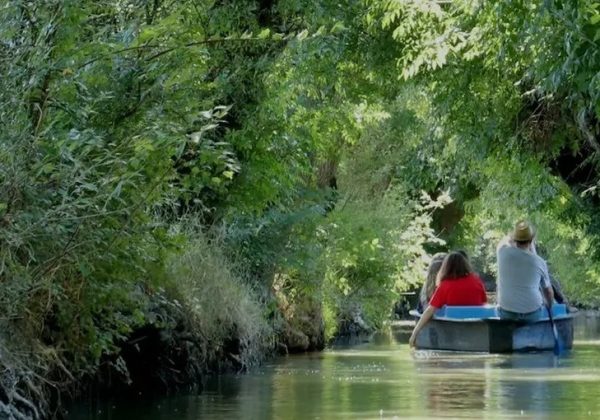
Gliding silently along a duckweed-covered channel under a canopy of ash trees, to the rhythm of the pole sinking into the mud: a boat trip is the most beautiful way to discover the Marais Poitevin. In the Venise Verte, water is everywhere, and it is through the water that you understand this landscape shaped by people over centuries.
Here is how to enjoy a boat trip in the Marais Poitevin: where to board, with or without a boatman, when to go, what you see along the water and where to stay beside the canals.
| Information | At a glance |
|---|---|
| Where? | The Venise Verte, between Niort and the Vendée, straddling the Deux-Sèvres, the Vendée and the Charente-Maritime |
| Landing stages | Coulon, Arçais, Damvix, Saint-Hilaire-la-Palud, Le Vanneau-Irleau |
| Options | Guided trip with a boatman, or self-guided boat or canoe hire |
| Duration | From one to several hours depending on the route |
| Season | Mainly from April to October, most landing stages close in winter |
| Status | Regional nature park and Grand Site de France |
The Marais Poitevin is one of the largest wetlands in France, between Niort and the ocean. Its most wooded part, the wet marsh, is nicknamed the Venise Verte (Green Venice) for its emerald reflections: a maze of canals, ditches and narrow channels lined with pollarded ash trees and poplars, where meadows and gardens are often only linked by water. For centuries, the boat was the only way to carry crops, livestock and people. The marsh is now protected by a regional nature park and holds the Grand Site de France label.
The main landing stages are in the villages of the Venise Verte. Coulon, in the Deux-Sèvres, is the best known and busiest, with its quays and honey-coloured stone houses. Arçais, another village full of character, offers quieter routes. You can also board at Damvix, on the Vendée side, at Saint-Hilaire-la-Palud or at Le Vanneau-Irleau. Choosing a landing stage slightly off the beaten track often lets you enjoy the marsh in greater peace, especially in summer.
With a boatman, don’t miss the fire on the water: by stirring the mud with the pigouille, the boatman releases bubbles of marsh gas, which he sets alight on the surface of the water. An amazing sight that children love.
Most landing stages open from April to October. Spring is ideal: the vegetation is a vivid green, the birds are nesting and visitor numbers remain moderate. In summer, set off early in the morning or late in the day, when the light is soft, the heat bearable and the canals quieter. Autumn brings lovely colours and a more intimate atmosphere. Depending on the water level, some routes may be changed.
The trip is above all an immersion in lush nature. Around the bends of the channels you may spot a grey heron, an egret, a kingfisher darting just above the water, sometimes an otter or a coypu. The banks are lined with pollarded ash trees, alders and willows, and in summer the surface of the canals is covered with duckweed. Stay discreet and avoid making noise to make the most of the wildlife.
To enjoy the marsh at daybreak, when the mist still hangs over the channels, nothing beats a stay by the water. In Saint-Hilaire-la-Palud, Camping Le Lidon stretches along the canals, with its own landing stage, boats and canoes, and also offers fishing in the heart of the Venise Verte. Also browse our waterside campsites in the Marais Poitevin and, to discover other marshes, our salt marsh sites where you can meet the salt workers.
A boat trip is the must-do experience of the Marais Poitevin. For a first time, go with a boatman, who will tell you about the marsh and show you the fire on the water, then come back the next day on a self-guided hire to lose yourself in the channels. In spring or early in the morning in summer, the Venise Verte reveals all its magic.
Campsites marked “Partner” are Aimer Camper members and are shown first. All results match your search.