
Blog
On holiday at a waterside campsite, sunburn can catch you off guard. The beach or the lake can sometimes turn your skin red within just a few hours. To treat sunburn, a few simple steps are all it takes to soothe the skin. Your waterside holiday isn’t over though: cool, hydrate, protect and watch for warning signs.
Follow this practical guide to soothe your skin quickly and make the most of the rest of your stay!
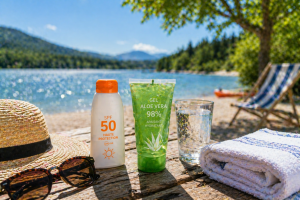
As soon as the skin turns red, cooling it down is the top priority. Get out of the sun immediately and find somewhere shaded or air-conditioned. Run the burnt area under cool (not icy) water for at least 15 minutes. This step slows the burn’s progression and limits inflammation. Then apply damp compresses if direct contact with running water becomes uncomfortable.
Absolutely avoid placing ice cubes directly on the skin, as this would make the injury worse. Also remove any tight or wet clothing that traps heat. Drink a large glass of water to counter dehydration, followed by two more within the hour. Your skin needs plenty of internal hydration after prolonged sun exposure!
Once you’ve cooled down, certain natural ingredients can speed up healing. Here are the most trusted ones to apply to clean, dry skin:
Choose quality products, free from added fragrance or alcohol. Reserve these applications for first-degree burns, without blistering. Repeat the treatment 2 to 3 times a day for 2 to 3 days for the best results.
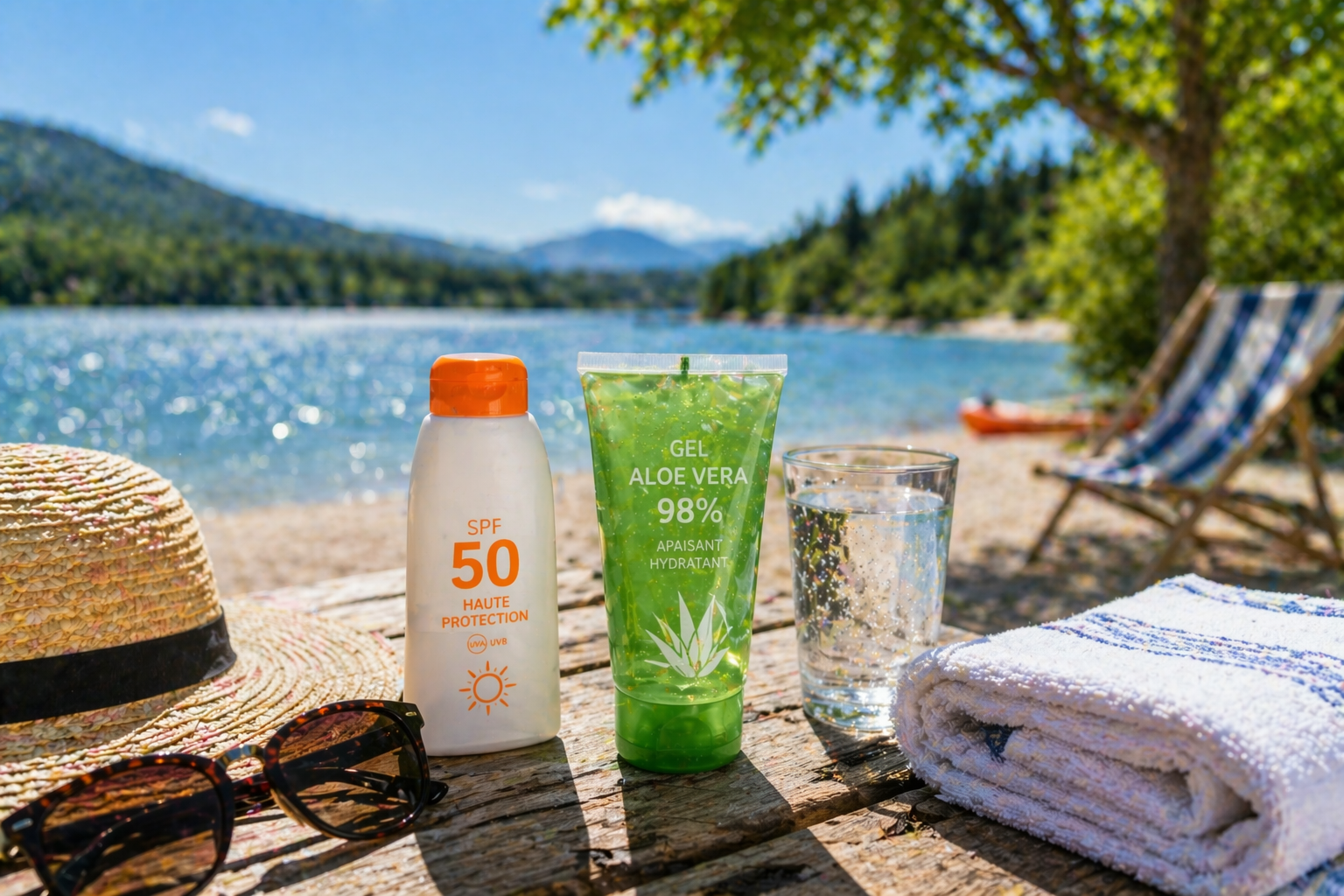
Our holidaymaker tip: after a day of paddleboarding or swimming, keep a tube of aloe vera gel in the fridge. Applied cold to slightly pink skin, it provides instant relief and stops the burn from taking hold.

Ordinary sunburn heals on its own within 4 to 7 days. But certain signs call for prompt medical attention. See a doctor or visit a pharmacy if you notice:
Children, older people and very fair skin call for extra vigilance. Extensive second-degree burns always require medical advice. Don’t wait for the situation to worsen. Medical advice will reassure you and point you towards the right treatment!
Prevention remains your skin’s best friend! To set off on your waterside holiday with peace of mind, a few simple rules apply:
Looking forward to enjoying your next waterside holiday with total peace of mind? Browse our range of campsites near the sea, a lake or a river. You’ll find shaded areas and services suited to families. Book your getaway and make the most of the sun, with soothed skin!
To quickly calm sunburn, cool the skin under cool water for 15 minutes. Then apply an aloe vera gel or a hydrating after-sun cream. Drink plenty of water, cover the area, and avoid any further sun exposure. This combination soothes redness and limits skin dehydration within a few hours.
For sunburn, pure aloe vera gel remains the most effective natural remedy. It provides long-lasting hydration and soothes inflamed tissue. Cold plain yoghurt, grated cucumber or calendula oil are excellent additions to the routine. These ingredients are best suited to mild burns, without blistering.
Yes, but you need to wait until you’ve fully healed before any further sun exposure. Burnt skin remains fragile for 7 to 10 days. Going back out in the sun too soon slows healing and increases the risk of lasting marks. Favour short sessions and SPF 50 cream as you gradually build up your exposure again.
Typical sunburn lasts between 3 and 7 days depending on severity. Redness fades after 48 hours, after which the skin peels for several days. More serious cases, with blistering, may take 10 to 14 days to heal completely. Regular hydration speeds up the healing process.