


Blog
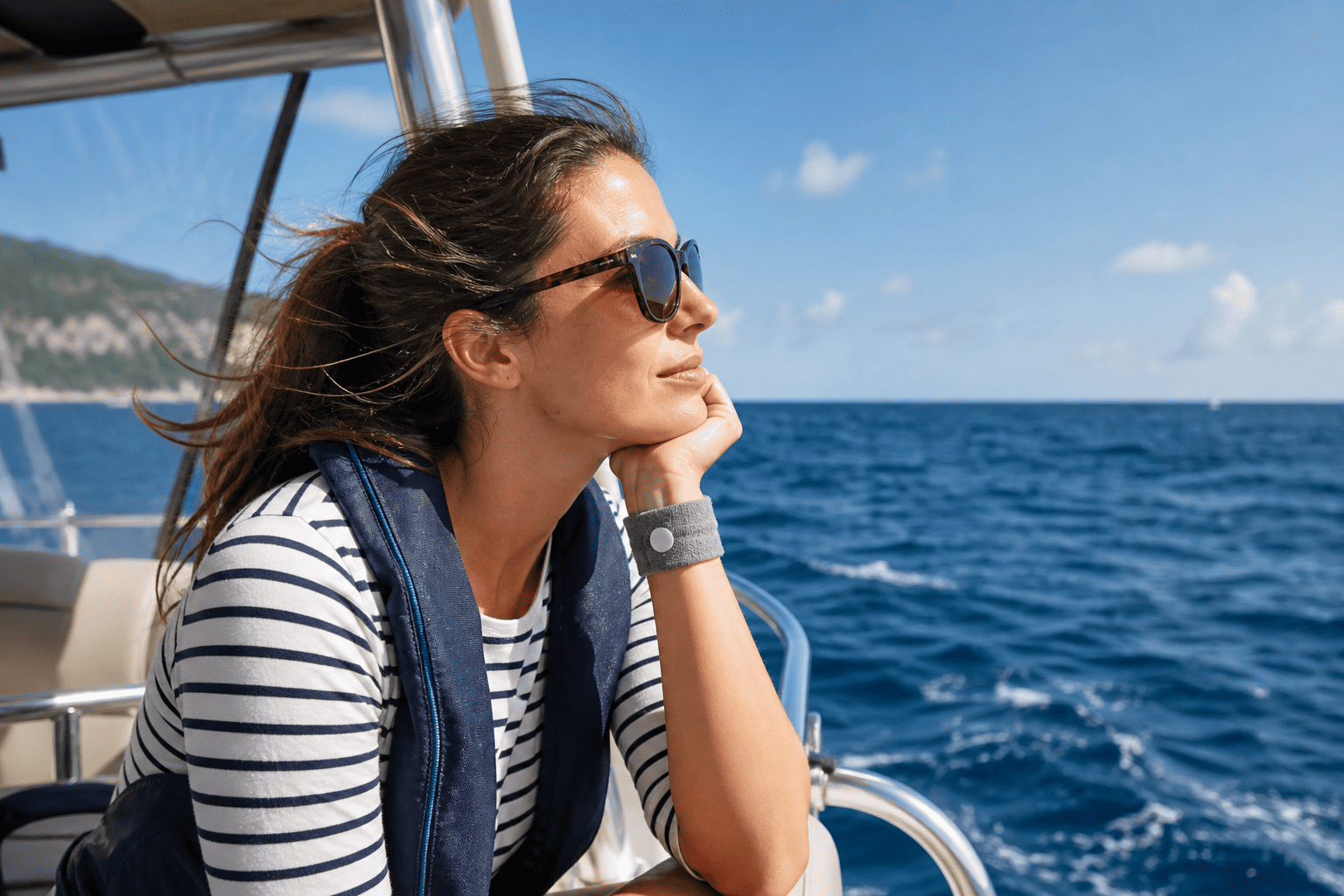
Planning a boat trip during your holiday at a waterside campsite but dreading nausea on board? Seasickness affects a large proportion of boaters, especially in rough seas. The good news is that there are concrete solutions to help you set off with peace of mind. Ginger, scopolamine patches, acupressure wristbands: this guide brings together 7 tried-and-tested remedies for seasickness.
You’ll know exactly what to take, when to take it, and how to position yourself on board!
Ginger stands out as the go-to natural remedy for seasickness. This Asian root acts directly on the digestive system and soothes nausea without causing drowsiness. It suits most people, from children to the elderly.
You can take it in several forms:
The usual dosage ranges from 500 mg to 1 gram per dose. Choose organic ginger, which has a higher concentration of active compounds (gingerols and shogaols). However, avoid combining it with anticoagulant medication without medical advice.
Good to know: ginger is one of the most widely studied natural remedies for motion sickness. A 1-gram dose taken an hour before departure may be enough to prevent the first symptoms.
Acupressure wristbands are a simple, medication-free alternative. They apply continuous pressure to the Nei-Kuan point, located 3 cm below the wrist crease. This point is said to ease nausea in traditional Chinese medicine.
These elastic wristbands should be put on a few minutes before boarding. Wear one on each wrist for the best effect. No known side effects, which makes them a popular choice for pregnant women and children.
Their effectiveness varies from person to person. Some boaters feel the benefits from the very first use, others much less so. Expect to pay between 5 and 15 euros for a good-quality pair, available at pharmacies or water sports shops. You can combine them with another remedy with no risk of interaction.
Keeping your eyes fixed on the horizon remains one of the most effective ways to prevent seasickness. This technique helps your brain realign the information coming from your inner ear and your eyes. It reduces the sensory conflict behind the nausea.
Sit facing the front of the boat and focus on a distant point. Avoid reading, looking at a screen, or staring at the deck. Combine this with slow, deep breathing through the nose. Breathe in for 4 seconds, letting your stomach expand, then breathe out for 6 seconds through your mouth.
This breathing technique activates the parasympathetic nervous system and eases feelings of nausea. A few minutes is often enough to feel better.
It’s a free, immediate remedy, always available on board!
Antihistamines are the most accessible medicated solution. Available without a prescription at pharmacies, they block the nerve signals responsible for motion-related nausea and dizziness.
Three brands dominate the French market:
For best results, take it 30 minutes to 1 hour before boarding. A second dose can be taken 4 to 6 hours later if the trip runs longer.
Please note: these medications often cause drowsiness and are not recommended if you’re driving. Check the leaflet and ask your pharmacist for advice if you’re on other medication.
The scopolamine patch is aimed at boaters facing long crossings and people who are highly prone to nausea. Available only on prescription, it continuously releases a substance that calms the nerve centres responsible for nausea.
It’s applied behind the ear at least 4 hours before departure. It remains effective for up to 72 hours, or 3 full days of protection. This remedy is particularly well suited to cruises, long crossings to Corsica, or deep-sea fishing trips.
A few precautions are needed: dry mouth, blurred vision and drowsiness are among the common side effects. The patch is not recommended for children, pregnant women, or people with glaucoma. Always wash your hands after applying it, as contact with the eyes can cause irritation.
Homeopathy appeals for its gentleness and lack of side effects. Cocculine remains the go-to French option. Its granules are left to dissolve under the tongue from the day before departure and throughout the trip. It’s suitable for pregnant women and children from 18 months.
Essential oils offer another natural route:
The effectiveness of these approaches remains subjective and is not proven by conventional medicine. Test them at home before your boat trip to gauge your own reaction. Avoid essential oils for children under 3 years old.
Beyond remedies, certain simple habits considerably reduce the risk of seasickness. Where you sit on board, what you eat and how much you sleep all directly affect your tolerance.
Here are the habits to adopt before and during your trip:
If nausea sets in despite everything, remember to breathe deeply and fix your gaze on the horizon. A short nap lying flat on the deck can also be enough to feel better within a few minutes.
« At our seaside campsites in Arcachon or La Rochelle, families pack their anti-seasickness kit just like their sun cream. It’s become second nature, to make the most of their boat trips », says our team
Dreaming of a waterside holiday, with the freedom to head out to sea without any worries? Our site lists more than 3,600 campsites by the sea, a lake or a river, all across France. Find the perfect place to combine lazing on the beach with boat trips on the agenda for your next holiday!
Seasickness lasts for the duration of the crossing in most cases. Symptoms fade as soon as the boat docks or the sea calms down again. Some passengers feel slightly unsteady or tired for a few hours after disembarking. This discomfort can persist for up to 24 hours in those who are particularly sensitive.
Yes, seasickness tends to decrease with age. It mainly affects children between 2 and 12 years old, then eases during the teenage years. Adults remain susceptible, but often only in more extreme conditions. After age 50, sensitivity drops noticeably for most people.
Yes, you can get seasick on a lake, especially in strong winds. Small craft such as pedal boats or motorboats amplify the sensations. Alpine lakes or large water bodies such as Lake Hourtin sometimes have enough swell to trigger nausea.
For a child, start with gentle solutions: acupressure wristbands, ginger sweets or Cocculine granules. Mercalm is approved from age 6, and Nausicalm from age 2 at an appropriate dose. Always check with your pharmacist before giving any medication, and read the leaflet carefully.
Acupressure wristbands are effective for some users, though there’s no universal guarantee. They work by stimulating the Nei-Kuan point, recognised in traditional Chinese medicine. Several studies confirm a beneficial effect, though it varies from person to person. They remain a worthwhile option, as they involve no medication and no known side effects.