
Blog
The Vendée Globe is the world’s most famous solo sailing race, non-stop and without assistance, around the globe. Every 4 years, skippers set off from Les Sables-d’Olonne to take on the three great capes alone and complete a full circuit of the planet. Want to understand the route, the duration and the history behind it?
Here’s everything you need to know, from its creation to its most recent records, along with our tips for experiencing the event from a waterside campsite!
| Element | Detail |
| Race type | Round-the-world sailing race, solo, non-stop and without assistance. |
| Start and finish | Les Sables-d’Olonne, in the Vendée. |
| Frequency | Every 4 years, since 1989. |
| Route | 3 capes (Good Hope, Leeuwin, Horn), around a reference distance of 40,000 km. |
| Current record | Just under 65 days, set by Charlie Dalin. |
The Vendée Globe is a sailing race that involves circumnavigating the globe alone, non-stop and without any outside assistance. Created by sailor Philippe Jeantot, it set off for the first time in 1989 with 13 competitors, and Titouan Lamazou won it after 109 days at sea. Since then, this extraordinary event has become a benchmark of offshore racing. The skippers sail IMOCA yachts, 60-foot (18.28-metre) monohulls capable of reaching speeds of up to 40 knots. For several months, they handle navigation, weather, repairs and sleep entirely on their own.
It’s this mix of total solitude and extreme commitment that has built the legend of the Vendée Globe!
The Vendée Globe route links Les Sables-d’Olonne back to itself, via a vast loop of the southern hemisphere from west to east. Unchanged since the race was created, it requires rounding three iconic capes, keeping them to port:
The theoretical reference distance is around 40,000 kilometres, roughly the Earth’s circumference. In practice, by playing the low-pressure systems and taking the fastest routes, competitors cover more than 28,000 nautical miles, or nearly 52,000 kilometres. This crossing of the Southern Ocean, between polar cold and giant waves, remains the true test of the race.
The Vendée Globe is held every 4 years, and each edition pushes the limits of offshore racing a little further. Since the first race in 1989, won by Titouan Lamazou, reference times have kept falling in step with technical progress. Foils, the appendages that literally lift the boats out of the water, have shaved off precious days.
In the tenth edition, Charlie Dalin completed his round-the-world voyage in 64 days, 19 hours and 22 minutes, almost 10 days faster than the previous record. This edition also recorded the lowest dropout rate in the race’s history, at 17.5%, proof of the growing reliability of IMOCA yachts.
Our tips: to follow the Vendée Globe as closely as possible, time your stay around the start window, in autumn. Campsites along the Vendée coast, just minutes from Les Sables-d’Olonne, let you visit the race village in the morning and enjoy the beach in the afternoon. Also consider properties by a nearby lake, to combine water-based entertainment with quiet evenings.
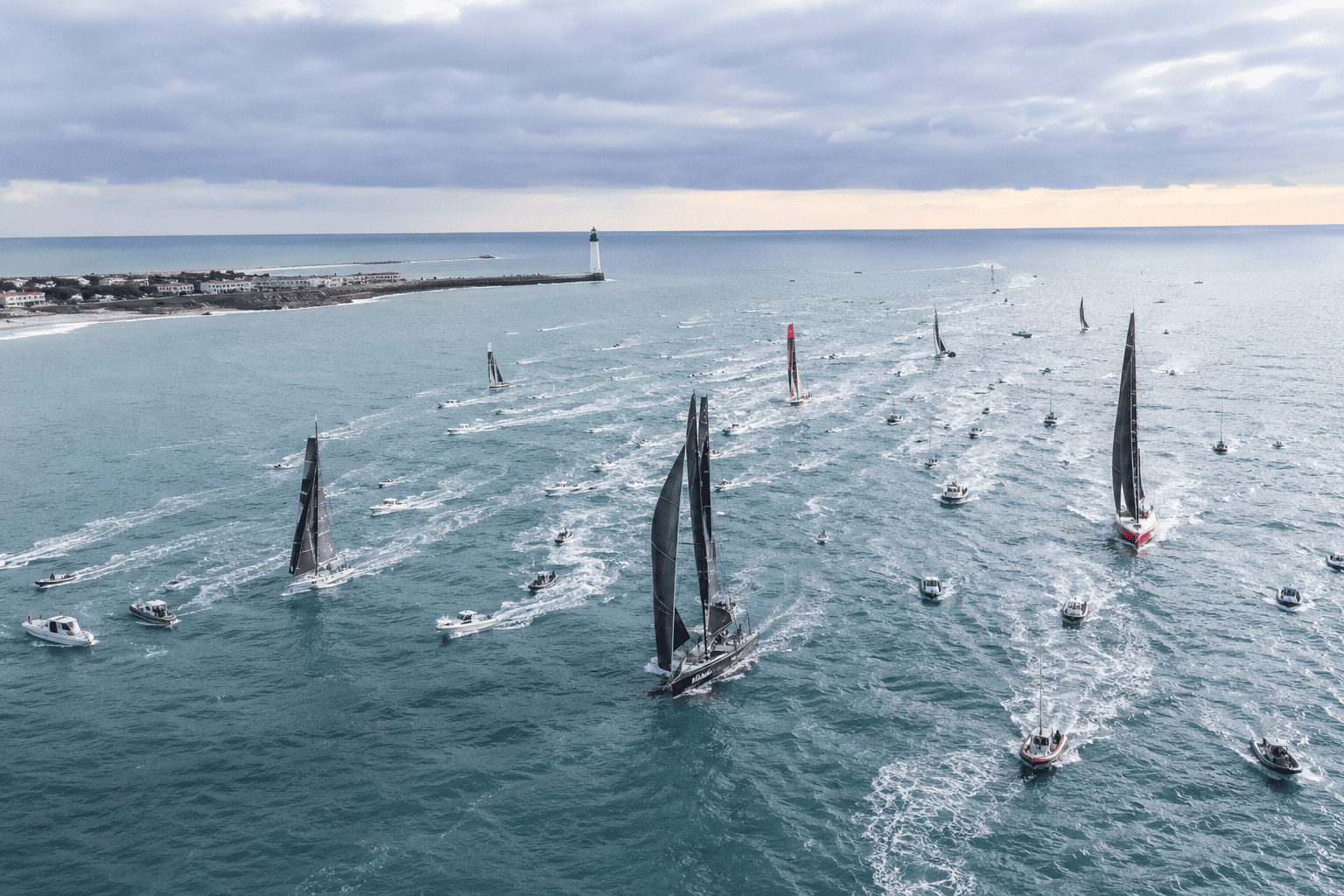
Watching the start of the Vendée Globe is an experience in its own right, drawing hundreds of thousands of visitors to the harbour of Les Sables-d’Olonne. Ahead of the big day, a village set up on the pontoons lets you get close to the boats and meet the skippers.
The channel, sailed one by one by the competitors to the sound of cheering crowds, delivers a particularly intense moment. To experience the event without any hassle, it’s best to stay nearby, along the Vendée coast. On our site, you’ll find waterside campsites to suit every budget, from the Atlantic beach to the shores of the Vendée’s lakes.
As our team sums it up: « The best vantage point for the start is often right from the water or the beach, just steps from where you’re staying. » Booking early remains the best way to secure a waterside pitch during this hugely popular period.
Dreaming of watching the next Vendée Globe start with your feet in the sand? Find your waterside campsite in the Vendée now, and book your stay facing the ocean!
The Vendée Globe lasts around three months. The duration varies depending on weather conditions and the boats, but the current record stands at just under 65 days, set by Charlie Dalin. The last competitors, on the other hand, can spend more than 100 days at sea before reaching the finish line.
The Vendée Globe boats set off from Les Sables-d’Olonne, in the Vendée. Both the start and finish lines are located in this Atlantic bay. The famous channel, which skippers sail up through the cheering crowds, marks the true kick-off of each round-the-world voyage.
Yes, watching the Vendée Globe start is free. The race village, set up on the harbour of Les Sables-d’Olonne, and the quaysides along the channel, welcome the public with no ticket required. It’s best to arrive early and stay nearby, as crowds are very large.
Charlie Dalin won the last Vendée Globe. He crossed the finish line at Les Sables-d’Olonne in 64 days, 19 hours and 22 minutes, setting a new race record. This victory crowned an edition marked by particularly high-performing foiling boats.