
guide
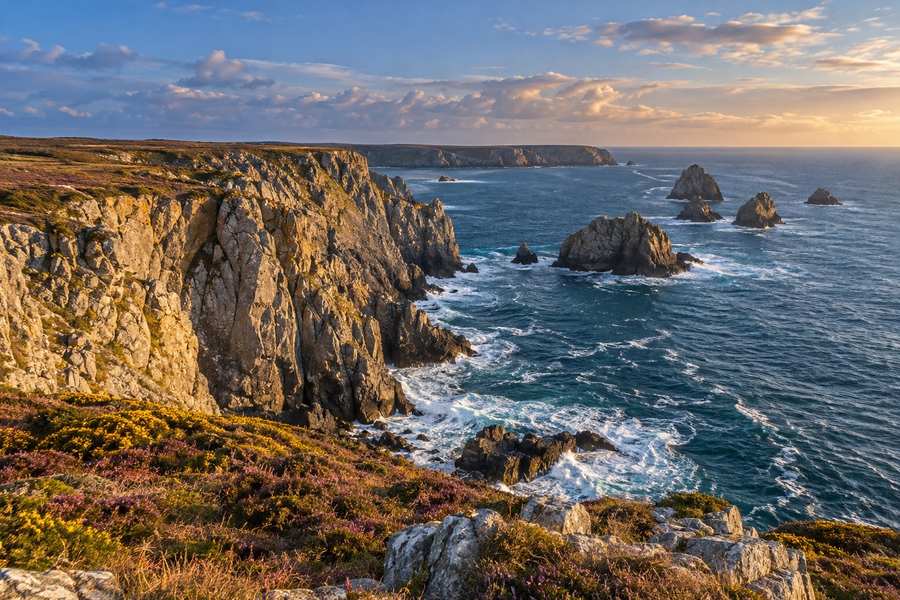
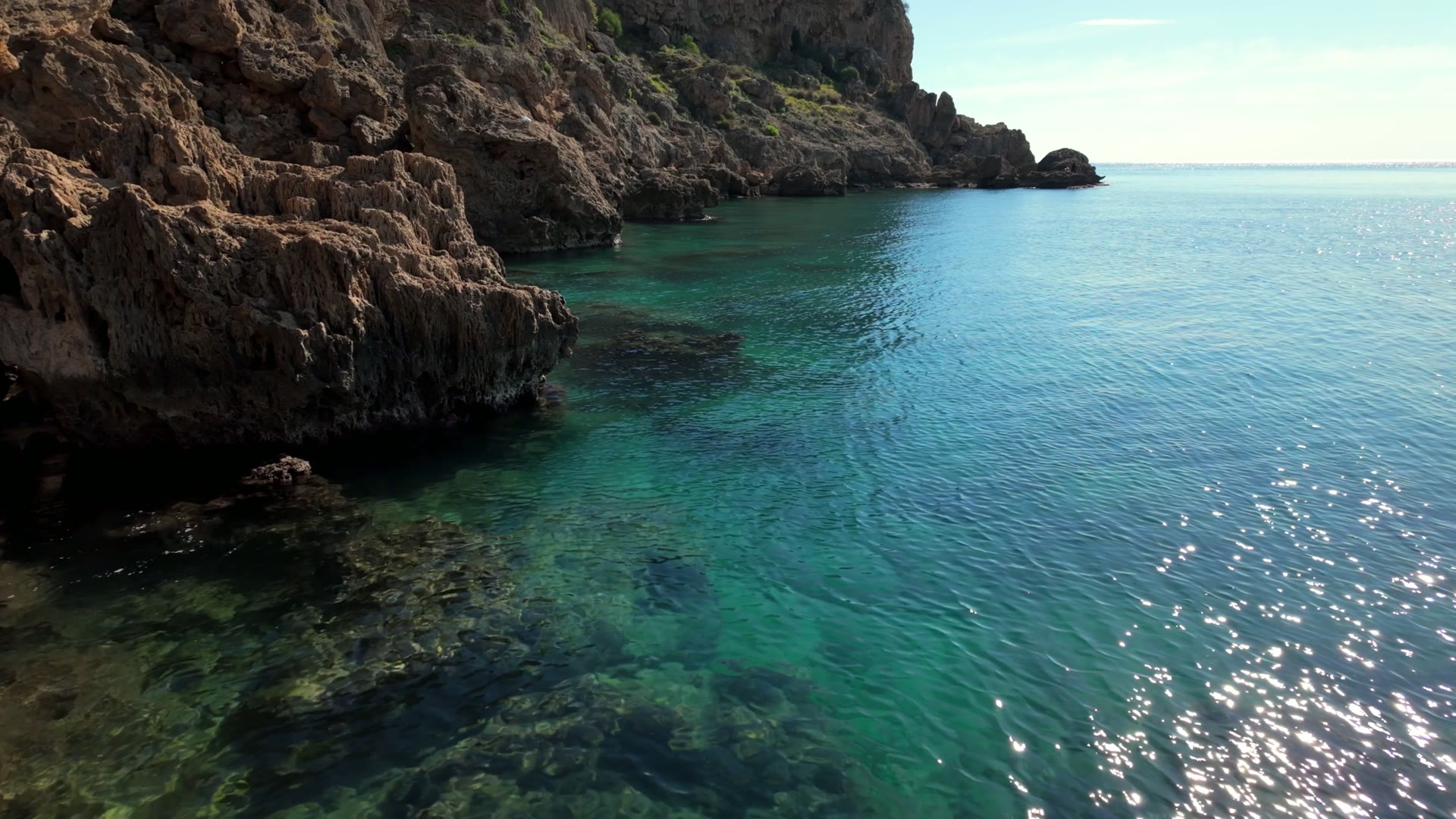
Jutting out like a cross into the Iroise Sea, between the Brest roadstead and the bay of Douarnenez, the Crozon peninsula packs the most spectacular sides of Brittany into some thirty kilometres: seventy-metre sandstone cliffs, coves of turquoise water, sea caves, fishing ports and chapels. Seven communes share the coast: Crozon and its seaside resort of Morgat, Camaret-sur-Mer, Roscanvel, Lanvéoc, Telgruc-sur-Mer, Landévennec and Argol. The whole area lies within the Armorique Regional Nature Park, and its coastline within the Iroise Marine Nature Park.
Here is what to see and do on the peninsula, from the most famous headlands to lesser-known outings, with our tips on when to go.
| Information | In short |
|---|---|
| Getting there | By road from Brest or Quimper, via Châteaulin and the Térénez bridge over the Aulne |
| Must-sees | Pointe de Pen-Hir and the Tas de Pois, Cap de la Chèvre, Pointe de Dinan, Morgat sea caves |
| Hiking | The GR34 over about 120 km, day loops of 10 to 17 km |
| Sea caves | By boat from Morgat, April to September, about 50 minutes |
| Swimming | Morgat cove, Trez Bellec, Brest roadstead; forbidden at La Palue and Lostmarc’h |
| Best time | June and September for quiet hiking, July and August for a lively atmosphere |
About 3 km south of Camaret-sur-Mer, the Pointe de Pen-Hir is the most photographed spot on the peninsula. Its sandstone cliffs drop some 70 metres into the Iroise Sea, facing the Tas de Pois, a string of rocks battered by the swell. On the plateau stands the Memorial to the Bretons of Free France, a granite Cross of Lorraine more than fifteen metres high, and a little further on the Battle of the Atlantic memorial museum, housed in the bunkers of the former Kerbonn battery.
At the northern end of the Dinan cove, a rock arch linked to the cliff by a natural bridge forms what is known as the Château de Dinan. From the point, the view takes in the long beaches of Goulien and Kersiguénou and the waves of La Palue. The coastal path offers one of the finest viewpoints on the Atlantic side here.
At the far south, the Cap de la Chèvre faces the bay of Douarnenez and the Cap Sizun. On the road leading to it, in the hamlet of Saint-Hernot, the Maison des minéraux occupies the former village school: it tells the geological story of the peninsula and holds one of the largest collections of fluorescent minerals in Europe (8 € for an adult in 2026). The peninsula has been a Regional Nature Reserve since 2013 for its geological sites: 27 remarkable outcrops, including Postolonnec beach and the Veryac’h cove, tell almost 475 million years of the Earth’s history.
North of Roscanvel, the Pointe des Espagnols looks across the narrows at Brest. It is the gentlest of the great headlands: people come for the panorama over the roadstead, the old fortifications and the ships entering and leaving the port of Brest. The small coast road around Roscanvel is ideal for a bike ride.
The cliffs closing the Morgat cove are riddled with caves that can only be seen from the sea. Boats leave from the Quai Kador in Morgat harbour from April to September, weather permitting: the “Découverte” trip lasts about 50 minutes, and a longer 1 hour 10 minute trip also follows the wild coast. Departures are timed around mid-tide, so times change every day: book the day before. The most famous cave, the Grotte de l’Autel, nearly 80 metres deep, can only be explored by kayak or paddleboard, ideally on a guided outing in calm seas.
With the family, the Morgat cove (Kador, Loc’h and Toul an Trez beaches) is the safe bet: fine sand, a sheltered bay, shops and the harbour close by. On the Brest roadstead, the shores of Lanvéoc and Le Fret offer calm water, best at high tide. In Telgruc-sur-Mer, the long Trez Bellec beach looks out to the Ménez-Hom and the bay of Douarnenez.
At low tide, the sea retreats a long way at Postolonnec, near Morgat, leaving rock pools where children go shore fishing, below cliffs that are part of the geological reserve.
For the postcard shot, the Île Vierge, a little turquoise cove at the foot of the cliffs north of Saint-Hernot, can only be reached on foot along the coastal path, and all the better for it.
For surfing, La Palue and Lostmarc’h draw experienced surfers, but swimming is forbidden there because of the currents. The Dinan cove, with Goulien and Kersiguénou, is more accessible and has a surf school.
The customs officers’ path runs right round the peninsula for about 120 km, which takes a week in stages of 15 to 20 km. Three day walks are enough to grasp its variety:
The path often runs close to the edge: good shoes and an eye on the weather are enough, but keep away from the cliff edges in strong winds.
Camaret-sur-Mer is the most picturesque fishing port on the peninsula. On its spit stands the Vauban tower, the “golden tower” built at the end of the 17th century, a UNESCO World Heritage site with the Fortifications of Vauban. Next to it, the chapel of Notre-Dame-de-Rocamadour and the boat graveyard tell the port’s maritime history. On the way out of town, on the road to Pen-Hir, stand the Lagatjar standing stones.
Landévennec, to the east, is one of the prettiest villages on the peninsula, on the banks of the Aulne. Saint Guénolé founded a monastery here in the late 5th century: the ruins of the old abbey and the herb garden are free to visit, and the museum traces fifteen centuries of Breton history. A community of Benedictine monks still lives in the neighbouring modern abbey.
Every year in early August, the Landaoudec meadow in Crozon hosts the Festival du Bout du Monde, one of Brittany’s major world music festivals. For three days the peninsula is fully booked: if you come at that time, book your accommodation several months ahead.
July and August guarantee a lively atmosphere, lifeguarded beaches and the festival, but also crowds on the popular paths and in the Pen-Hir car parks. June and September are the best months for hiking and enjoying the beaches in peace, with the caves still accessible by boat. In spring and autumn, the peninsula is mostly enjoyed on foot, between two showers and in superb light. Keep an eye on the tides: they change everything, for swimming as well as shore fishing and kayak trips.
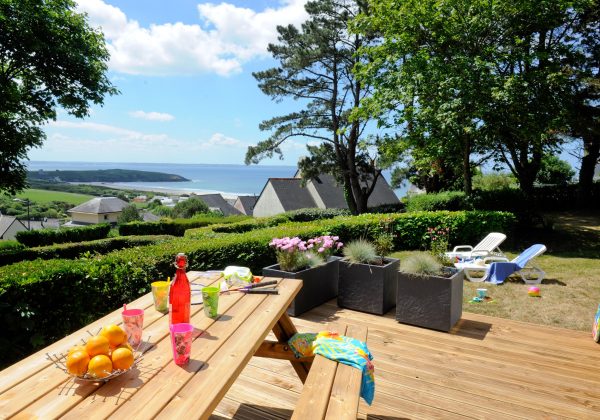
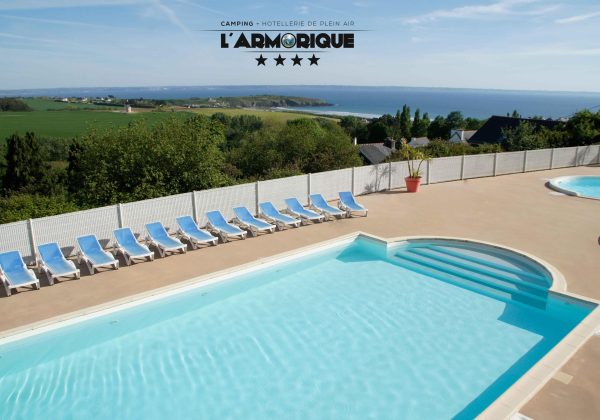
Thirteen campsites are spread across the peninsula, between the Brest roadstead, Morgat, Telgruc and Camaret: sites right by the water facing Brest, four-star campsites with indoor pools, small quiet places by the sand. To compare their facilities, opening dates and distance to the sea, see our selection of waterside campsites on the Crozon peninsula.
Campsites marked “Partner” are Aimer Camper members and are shown first. All results match your search.